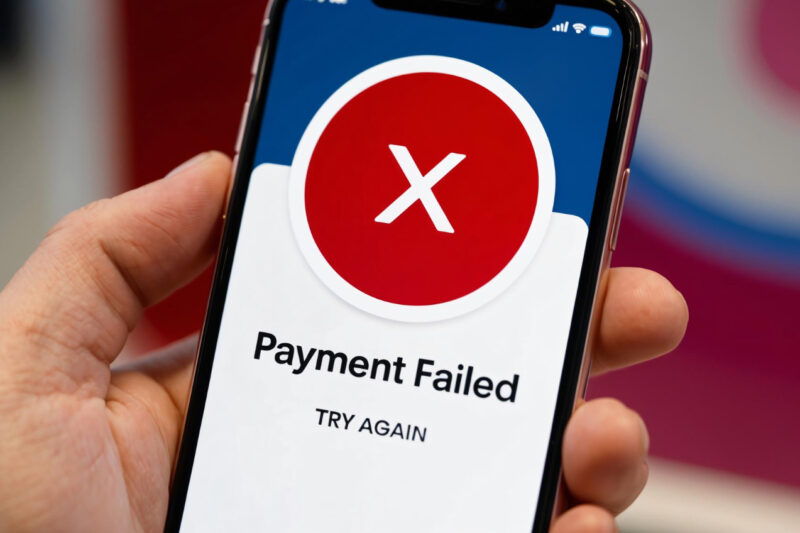
Your EMI left your account on the 5th, like it always does. You open your lending app on the 7th, and it still says “processing.”
That is one of the most common messages a support team gets, and almost every time, nothing has actually gone wrong.
“Repayment status” sounds like one thing, but it is really three different problems depending on what is happening on your end.
Ramesh, an IT support executive in Bengaluru on his first personal loan, ran into exactly the scenario above. His EMI left on schedule, but the app still showed “processing” two days later, and he spent an evening convinced something had gone wrong.
Priya, a freelance graphic designer in Pune, missed one payment because a client transferred her fee nine days late, and had no idea if that one slip would follow her for years.
Suresh, a delivery partner in Ahmedabad, did not skip a payment on purpose. His autodebit failed because his account was short by ₹200 that day, and he only found out when a late fee showed up three weeks later.
This piece walks through all three, and along the way covers what people actually search for,i.e., what loan repayment means, how it is different from paying off a credit card, how to check your status without guessing, and why your loan account number matters more than you would think.
Problem 1: Why Does the App Still Say “Processing”?
This is the most common confusion of the three, and it is almost never an actual problem.
Your bank and your lender run on two separate systems that do not talk to each other in real time. Your bank statement shows the debit the second the money leaves your account.
The lender’s system, Olyv’s included, usually takes anywhere from a few hours to two working days to reconcile that payment against your loan.
What Ramesh should have checked instead of refreshing his banking app every hour was his loan account number on Olyv’s status page. It shows “payment received, reconciliation in progress” rather than a bare “processing” that looks alarming out of context.
Once he looked there, the confusion cleared up in under a minute. The money was never missing. The two systems were just a day apart.
Problem 2: What Actually Happens When You Miss One Payment?
This is the one people worry about most, and the honest answer sits somewhere between “nothing happens” and “your credit is ruined.”
It is closer to the first, if you move quickly.
Missing one EMI by a few days, before it is reported as overdue, usually just means a late fee.
Most lenders only report a missed payment to the credit bureau once it crosses a set number of days past due, commonly 30, though this varies by lender.
So, a payment that is a week late is not automatically the same thing as a default on your credit report.
What actually decides the outcome is what you do in that gap, such as;
- Pay within a few days, before the next due date comes around, and it is typically just a late fee. Credit impact is unlikely.
- Call the lender before the due date, not after. Advance notice tends to buy you flexibility that a call made after the fact does not.
- Cross 30+ days without paying or communicating, and bureau reporting becomes likely. It starts showing up on your credit history.
- Let it happen repeatedly over several months, and it affects your score and your terms on the next loan you apply for.
Priya called the support team the same week her client payment was delayed, explained the situation, and paid four days late.
A late fee applied, but nothing went to the bureau because she had acted within that window.
The real lesson is not that missing a payment is fine. It is that the gap between a few days late with a heads-up and a month late with silence is enormous, and most people do not realise how much it matters until they are standing in it.
Problem 3: When Autodebit Fails and Nobody Tells You
This one is quietly common and rarely talked about. Autodebit (NACH or e-mandate) fails for reasons that have nothing to do with skipping a payment on purpose.
It could be insufficient balance on the debit date, a bank server hiccup, or a mandate that expired without you noticing. The catch is that most people do not find out until well after the fact, because there is no loud alert the moment it fails.
Sometimes it is just a routine SMS buried among dozens of others.
The fix is not complicated once you know to look for it.
Check your loan account two to three days after every due date, not just on the day itself, especially if your balance tends to run close to zero around payment time.
If your bank allows it, setting your salary credit date to land a day or two before your due date removes this risk almost entirely.
What Does Loan Repayment Actually Mean?
Underneath all three stories is one simple mechanic: repaying a loan means paying back what you borrowed, plus the interest charged on it, in fixed installments over an agreed period.
Each EMI splits into two parts. Principal reduces what you originally borrowed, and interest is the lender’s charge for lending it to you.
Early in the loan, more of each payment goes toward interest, and that shifts toward principal as the tenure runs its course.
This is how every amortised loan works, not something specific to one lender.
Loan Repayment vs. Credit Card Repayment: Not Quite the Same Thing
The two get used interchangeably in conversation, but there is a real difference worth knowing.
Repaying a loan applies to fixed-term borrowing such as personal, vehicle, or education loans, where the amount, tenure, and end date are all fixed from day one, exactly like Ramesh’s, Priya’s, and Suresh’s loans above.
Paying off a credit card is a different structure that revolves around credit with no fixed end date, where the balance moves depending on how much you spend and repay each cycle.
If Suresh had bought his delivery bike battery on a card instead of taking a loan, he would be managing a running balance, not a fixed schedule.
How Do You Check Your Status?
1. Lender’s app – On Olyv, this shows installments paid, installments remaining, outstanding balance, and your next due date on one screen, including whether a recent payment is still reconciling. This alone would have solved Ramesh’s confusion.
2. Your loan account number, entered on the lender’s website – Every loan has one, usually sitting in your loan agreement or the disbursal SMS. Entering it pulls up your status without a full app login.
3. SMS or email alerts. Worth keeping instead of deleting. They are your paper trail if a payment is ever disputed, and often the only early sign an autodebit failed. This is the alert Suresh nearly missed.
4. Calling support with your loan number ready – The slowest option, but the right one when something looks genuinely off, like Priya’s call, made before the due date passed, not after.
Loan Account Number Is Worth Saving
Your loan account number ties your payment history to that specific loan, not your name or phone number, since either of those can be linked to more than one account.
A few habits worth building;
- Save it somewhere you will actually find again, not buried three scrolls deep in a WhatsApp chat.
- Quote it first when you contact support. It cuts resolution time compared to searching by name.
- Check it against your loan agreement right after disbursal, not for the first time in the middle of a dispute.
What is Different About Personal Loans Specifically?
Personal loans come with a couple of specific quirks.
There is no collateral behind them, unlike a vehicle or gold loan, which means a missed payment tends to hit your credit profile faster than it would on a secured loan.
That’s part of why Priya’s quick call mattered more than it might have for, say, a gold loan with an asset sitting behind it.
Olyv lends via RBI-registered NBFCs and reports payment activity to credit bureaus the same way any regulated lender does, which is worth checking for whenever you are comparing a regulated NBFC against an app that is not upfront about its lending license.
Paying extra toward the principal when you have spare cash can shorten your tenure meaningfully, and prepayment is usually allowed.
What a Repayment Calculator Actually Tells You
A repayment calculator takes your loan amount, interest rate, and tenure, and shows your EMI along with a month-by-month principal-interest split.
It is most useful before you borrow. Testing a shorter tenure against a longer one shows the real trade-off: a higher monthly outgo with far less total interest, versus lower monthly pressure at a higher overall cost.
Olyv’s personal loan calculator runs exactly this, with no sign-up needed to test a few scenarios.
What You Actually Need to Remember
Ramesh’s problem was a timing gap between two systems, not a lost payment. Priya’s problem got solved by a phone call made before the due date, not after. Suresh’s problem was a silent autodebit failure that a check two days later would have caught early.
None of these were really about not understanding how loan repayment works. They were about not knowing which tool answers which question, and reaching for a bank statement when the loan account itself had the answer.
That is usually the real gap, and it is a five-minute fix once you know where to look.
Last Updated: Sep 2026 | Reviewed By: Shree Lahari K.A., Senior Marketing Associate, Olyv