
When an individual applies for a loan, lenders do not consider only one factor in determining whether or not to approve the loan. Lenders consider various factors of an individual’s financial condition in determining whether or not the individual is capable of repaying the loan in a responsible manner. Among these factors of an individual’s financial condition, one of the most popular factors considered by lenders in the United States of America is the five C’s of credit.
The five C’s of credit can help an individual prepare themselves in a much better manner before applying for a loan of any kind, whether it is a personal loan, a home loan, or a business loan. In the following sections of this article, we will discuss what are the five C’s of credit and how lenders use these factors in five C’s of credit analysis in determining whether or not an individual should be granted a loan.
What Are the Five C’s of Credit?
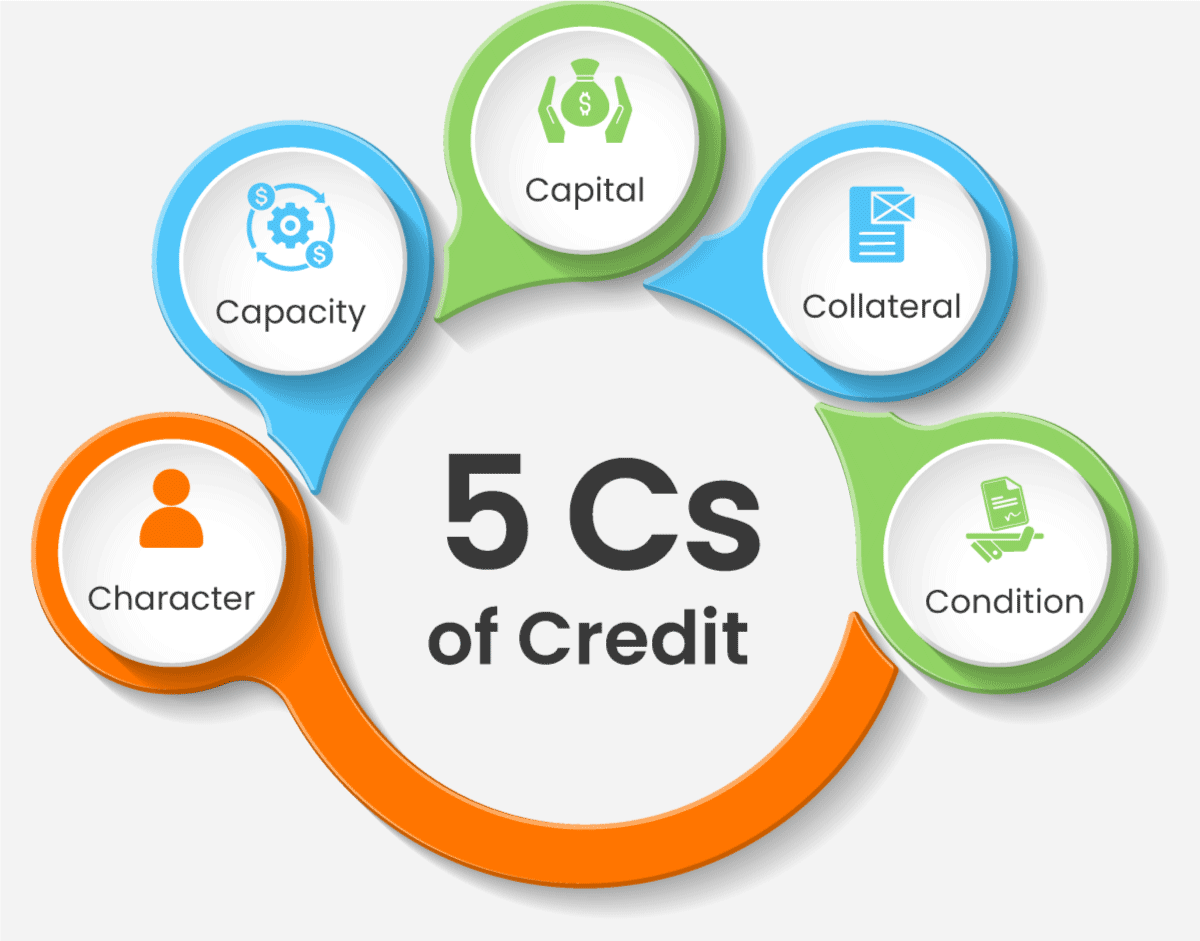
Before going into further detail about each factor, it is important to know what exactly are the five C’s of credit. These are the five major factors that are taken into account while assessing the creditworthiness of an individual.
- Character
- Capacity
- Capital
- Collateral
- Conditions
These factors offer various insights regarding the financial reliability of the borrower. These are the foundation of the five C’s of credit analysis. It helps lenders decide whether granting a loan would be a financially safe option.
Why the Five C’s of Credit Matter
Financial organizations always try to reduce the risks associated with lending money. These factors help lenders analyze whether the borrower would be able to repay the loan on time or not.
These factors impact various areas of lending money, including:
- Loan approval or rejection
- Loan amount offered
- Interest rate applied
- Repayment tenure
For borrowers, understanding these factors can make the loan application process smoother and improve approval chances.
Overview of the Five C’s of Credit
| Credit Factor | What It Represents | Why It Matters to Lenders |
| Character | Borrower’s credit history and financial behaviour | Shows reliability in repaying debts |
| Capacity | Ability to repay based on income and obligations | Indicates repayment capability |
| Capital | Personal investment or financial assets | Shows financial stability |
| Collateral | Assets pledged against the loan | Reduces lender risk |
| Conditions | Economic conditions and loan purpose | Helps evaluate external risks |
This framework forms the foundation of five C’s of credit analysis, allowing lenders to make informed lending decisions.
1. Character
Character refers to a borrower’s reputation for repaying debts. It is one of the most important components of the five C’s of credit because it reflects financial discipline and past credit behaviour.
Lenders evaluate character by reviewing:
- Credit score
- Credit history
- Past repayment records
- Loan defaults or missed payments
A good credit record implies that the borrower has been able to fulfill all their obligations. In contrast, defaulting payments may imply a higher risk for the lender.
For instance, a borrower with a credit score of over 750 is considered a low-risk borrower, which may result in quick loan processing and lower interest rates.
2. Capacity
Capacity refers to the borrower’s capacity to pay the loan based on their income and existing responsibilities. In essence, it is a simple question of whether the borrower is able to pay the loan.
Lenders assess capacity by reviewing:
- Monthly income
- Employment stability
- Existing loans or EMIs
- Debt-to-income ratio
A common benchmark used by lenders is the debt-to-income ratio (DTI). This ratio measures how much of your monthly income is already being used to repay debts.
| Monthly Income | Existing EMI | Debt-to-Income Ratio |
| ₹50,000 | ₹10,000 | 20% |
| ₹60,000 | ₹30,000 | 50% |
| ₹80,000 | ₹20,000 | 25% |
In most cases, it is desirable that the total EMIs are less than 40–50% of the borrower’s monthly income.
3. Capital
The term Capital is used for the personal investment of the borrower, i.e., savings of the borrower. It is a measure of how much the borrower is financially prepared for any unexpected circumstances.
For instance, if a borrower is applying for a business loan, it is desirable that the borrower has already invested their own money in the business.
Capital may be:
- Savings accounts
- Investments
- Property ownership
- Business assets
A person with financial reserves is viewed as a lower risk since he/she is more likely to survive financial shocks without failing to honor a loan.
4. Collateral
Collateral refers to assets that are given to a lender as a form of security for a loan. In case a borrower is unable to repay a loan, a lender has the right to claim a loan from the assets that are given as collateral.
Types of collateral:
- Property
- Vehicles
- Gold
- Fixed deposits
Secured loans such as mortgages and car loans require collateral. However, personal loans are unsecured; thus, other factors of the five C’s of credit are more important.
Collateral helps a lender minimize risk; thus, a borrower is able to enjoy lower interest rates.
5. Conditions
Conditions are the external factors that may affect the repayment ability of the borrower. These include the economic conditions, the industry conditions, and the purpose of the loan.
For example, lenders may consider:
- Current interest rate environment
- Economic stability
- Employment trends in the borrower’s industry
- Loan purpose (education, home purchase, business expansion)
Though the financial credentials of the borrower are strong, the economic conditions may affect the decision of the lender to approve the loan.
How Lenders Use the Five C’s of Credit Analysis
The lenders consider all the five factors to develop a comprehensive profile of the borrower.
Here is a simplified example of how five C’s of credit analysis may influence loan decisions:
| Borrower Profile | Credit Score | Income Stability | Collateral | Loan Decision |
| Applicant A | 780 | Stable job | None | Approved with low interest |
| Applicant B | 650 | Moderate income | Gold collateral | Approved with higher interest |
| Applicant C | 600 | Unstable income | None | Likely rejected |
This analysis will assist lenders in making responsible lending decisions.
Tips to Improve Your Credit Profile
Knowing the five Cs of credit will assist borrowers in strengthening their credit profile before applying for a loan.
Here are some useful tips:
Maintain a good credit score
Pay your EMIs and credit card bills on time to maintain a good credit score.
Manage debt carefully
Avoid taking multiple loans simultaneously, as it will increase your debt.
Build financial reserves
Having savings and investments will improve your capital position
Provide accurate documentation
Having proof of income and stable employment will increase the chances of getting a loan.
Use reliable financial platforms
Digital technologies, such as Olyv, help borrowers understand their credit scores and eligibility for loans, thus becoming more prepared for a credit application.
Why Borrowers Should Understand the Five C’s
It is understandable for some people to get confused when they are rejected from getting a loan. However, understanding the five C’s will help them clear the air on how a lender views them.
Understanding the five C’s will help you:
- Improve your financial profile
- Increase chances of approval
- Negotiate better terms on the loan
- Prevent avoidable loan rejections
When the borrowers are aware of these factors, they are more confident during the loan process.
Final Thoughts
The five C’s of credit are a framework that helps the lenders evaluate the reliability of the borrowers. The five factors are character, capacity, capital, collateral, and conditions. These factors help the lenders evaluate the risk factor associated with lending money.
Knowing the five C’s of credit helps the borrowers look at the lending process from the point of view of the lenders. Instead of depending on the single factor of income levels, the borrowers are able to improve their chances of being granted a loan by improving all the aspects of the lending process.
By being aware of the five C’s of credit evaluation and by being financially sound, the borrowers are able to improve their chances of being granted a loan in the future. Financial discipline and timely repayment are the best ways to access loans when needed.




A lot of people assume their credit score is the only thing lenders look at, but your breakdown of the five C’s shows how much broader the evaluation really is. Capacity and capital, in particular, can make a big difference because they reflect whether someone can realistically manage new debt. Understanding these factors beforehand can definitely help borrowers prepare stronger loan applications.