Most people think a personal loan decision begins with a credit score.
In real lending environments, it doesn’t.
The credit score is simply the first filter, not the decision engine.
Behind that number sits a quieter evaluation system that most borrowers never see: how stable your financial behavior looks over time, how predictable your repayment capacity is, and how “risky” your credit pattern appears when viewed as a timeline instead of a snapshot.
This is where most online advice fails. It explains scores, not decisions.
The misunderstanding: credit score is not a qualification; it is a risk label
Borrowers often treat credit scores as:
“If I cross this number, I get the loan.”
But lenders treat it differently.
A more accurate interpretation is:
Credit score = probability of repayment behavior consistency
Not approval.
Not eligibility.
Not a guarantee.
Just probability.
This is why two applicants with similar scores often receive completely different loan outcomes.
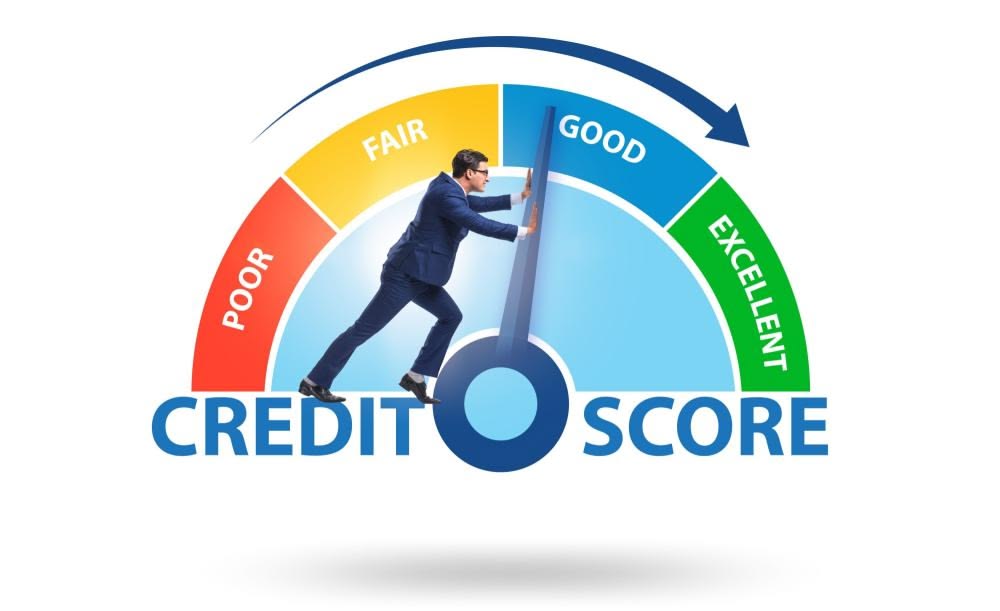
A more realistic way lenders interpret credit scores
Instead of rigid thresholds, most lending systems behave like this:
Strong behavioral zone (typically 750+)
- Borrower behavior is predictable
- Lower monitoring required
- Faster approvals and better pricing likelihood
Stable but sensitive zone (700–749)
- Acceptable but not fully risk-free
- Outcome depends heavily on income stability
- Pricing varies significantly
Volatile behavior zone (650–699)
- Credit history shows inconsistency
- Approval depends on compensating strengths (income, job stability)
- Loan structure is adjusted defensively
High-risk zone (below 650)
- Lending is selective and heavily restricted
- Non-credit factors become primary decision drivers
The key insight: lenders are not looking at your score. They are looking at your financial behavior consistency across time.
The real decision model: “credit score vs income stability tension.”
One of the most misunderstood parts of personal lending is this trade-off:
A high credit score cannot fully compensate for unstable income.
A stable income can sometimes compensate for a moderate credit score.
Lenders continuously balance two forces:
- Credit history (what you did)
- Income stability (what you can do repeatedly)
This is why approvals often feel inconsistent from the borrower’s perspective.
Why a 700 score feels “good enough” but not “strong enough.”
A 700 credit score sits in a transition zone.
It usually signals:
- No severe defaults
- Some inconsistency in credit usage or repayment timing
- Moderate risk profile
From a lender’s perspective, this is not a rejection zone; it is a pricing zone.
That means:
- Approval is possible
- Terms become adjustable
- Risk pricing increases slightly
In simple terms, you are approved, but not optimally priced.
Why borrowers with 650 sometimes still get loans
This is where most assumptions break.
A borrower with a lower credit score can still get approval if:
- Salary inflow is stable and traceable
- Existing debt obligations are low
- Bank statement behavior shows discipline
- Employer/business profile reduces uncertainty
Lenders are not trying to reward credit scores; they are trying to reduce uncertainty.
If income stability reduces uncertainty, it can partially offset a weaker score.
The hidden layer: lenders don’t evaluate scores; they evaluate patterns
A credit score compresses behavior into a number.
But lending systems internally expand it back into patterns like:
- Frequency of credit usage
- Timing of repayments
- Credit dependency level
- Recent financial stress signals
- Income-to-liability rhythm
This is why two identical scores can produce different outcomes:
because the underlying patterns are not identical.
A practical example most borrowers relate to
Two applicants apply for the same loan:
Applicant A
- Credit score: 740
- Income: irregular
- High EMI burden
- Recent credit activity spikes
Applicant B
- Credit score: 680
- Income: stable salary credits
- Low debt exposure
- Clean recent banking behavior
Outcome in many real cases:
- Applicant B may receive a better offer than expected
- Applicant A may face restrictions despite a higher score
This is not an inconsistency. It is risk modeling.
Why “loan eligibility calculators” often feel misleading
Eligibility calculators typically assume:
- Credit score is linear
- Income is stable
- Behavior is static
But real lending decisions are dynamic.
They change based on:
- Recent credit behavior
- Debt stacking patterns
- Internal lender risk appetite
- Short-term financial volatility
That’s why calculator outputs often differ from final loan offers.
Minimum credit score for personal loan (what actually exists in practice)
There is no universal minimum defined across all lenders.
However, market behavior typically clusters like this:
- Above 750 → smoother approvals
- 700–749 → conditional approval range
- 650–699 → selective approvals
- Below 650 → restricted lending zone
Important nuance:
These are observed lending patterns, not fixed rules.
The overlooked factor: “financial predictability.”
If there is one concept borrowers misunderstand the most, it is this:
Lenders prefer predictable borrowers more than high-score borrowers.
Predictability is built through:
- Stable income deposits
- Controlled credit usage
- Consistent repayment cycles
- Low financial volatility
This is why improving credit score alone often does not immediately change loan outcomes.
Is a higher credit score always better?
Not always in isolation.
A higher score helps only when:
- Income stability supports it
- Debt levels are controlled
- Credit behavior is consistent
Otherwise, it becomes a weak signal wrapped around unstable financial behavior.
FAQs – Good Credit Score for Personal Loan
Why do people with higher credit scores sometimes get rejected?
Because lenders evaluate income stability, recent financial behavior, and debt exposurenot just the score.
Can a low credit score still result in loan approval?
Yes, if income stability and repayment capacity reduce overall risk perception.
Does credit score directly decide loan amount?
No. Loan amount is primarily influenced by income, obligations, and repayment capacity.
Why does a 700 credit score not guarantee the best interest rate?
Because lenders adjust pricing based on overall risk profile, not score alone.
What improves loan approval chances faster than credit score?
Stable income patterns and low debt-to-income ratio often have a stronger immediate impact than score changes.
Final perspective: credit score is not your financial identity
A credit score is a summary, not a story.
Lenders don’t approve summariesthey reconstruct the story behind them.
They look for:
- Stability over time
- Behavioral consistency
- Risk predictability
- Capacity to repay under normal conditions
This is why improving financial health is more powerful than chasing a number.
Platforms like Olyv focus on helping users understand this broader systemso credit decisions are driven by clarity, not confusion.