
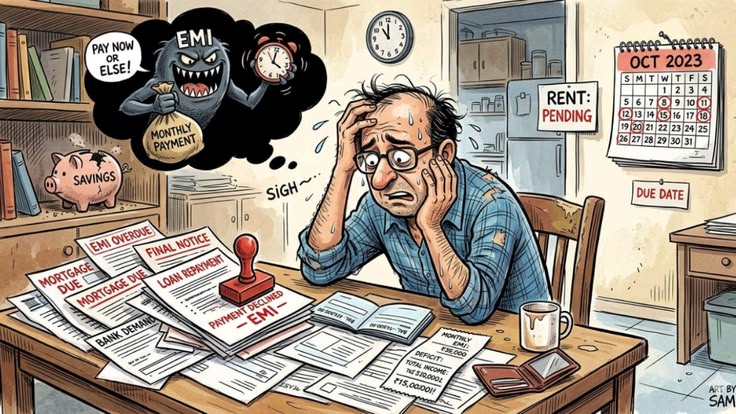
Missing a loan payment can create financial complications. Many borrowers search online for terms like loan overdue meaning, personal loan overdue, or loan overdue charges when they notice a delay in their loan repayment.
Understanding what a loan overdue is and how it affects finances is important for maintaining a healthy credit profile. Overdue payments may lead to additional charges, credit score impact, and reminder notices from lenders.
This guide explains what an overdue loan means, how overdue amounts are calculated, and the steps borrowers can take to clear outstanding dues.
What Is a Loan Overdue?
A loan overdue occurs when a borrower fails to make a scheduled loan payment by the due date. When the repayment deadline passes, the unpaid amount becomes overdue. Lenders may apply additional charges, and the overdue status may appear in credit reports if the delay continues.
Loan Overdue Meaning
The loan overdue meaning refers to a loan installment that has not been paid on or before the scheduled due date.
When borrowers take loans, they agree to repay the amount through regular installments. If a borrower misses a payment deadline, the unpaid installment becomes an overdue amount.
Key points about overdue loans
- Payment is delayed beyond the due date
- Outstanding amount remains unpaid
- Additional charges may apply
- Credit score may be affected
Borrowers should address overdue payments quickly to avoid further financial consequences.
What Does Overdue Mean in Loans?
Many borrowers ask what does overdue mean in loans when they receive reminders or statements mentioning overdue amounts.
In simple terms, overdue means that the borrower has missed a payment deadline.
Example
Suppose a borrower has an EMI due on the 10th of every month. If the payment is not made by that date, the amount becomes overdue from the next day.
The overdue amount usually includes:
- The missed EMI
- Applicable penalty charges
- Any accumulated interest
Personal Loan Overdue
A personal loan overdue occurs when a borrower fails to pay the scheduled EMI for a personal loan.
Personal loans usually have fixed monthly installments. Missing even one EMI can result in an overdue amount.
Consequences of personal loan overdue
- Late payment penalties
- Impact on credit score
- Reminder notices from lenders
- Possible legal follow-up if overdue continues
Managing repayment schedules carefully helps avoid these situations.
Loan Overdue Amount Transaction
Borrowers may see terms like loan overdue amt transaction in bank statements or loan accounts.
This usually refers to the unpaid amount recorded in the loan account due to missed payments.
Components of overdue amount
| Component | Description |
| Missed EMI | The installment that was not paid |
| Interest | Interest accumulated on the unpaid amount |
| Penalty | Late payment fee charged by the lender |
Tracking loan account statements regularly helps borrowers identify overdue transactions early.
Loan Overdue Charges
Most lenders apply loan overdue charges when payments are delayed.
These charges are intended to encourage timely repayment and compensate lenders for delayed payments.
Common types of overdue charges
- Late payment penalty
- Additional interest on overdue amount
- Administrative fees
Example
| EMI Amount | Delay | Possible Charge |
| ₹10,000 | 5 days | Late fee may apply |
| ₹10,000 | 15 days | Interest + penalty |
| ₹10,000 | 30 days | Higher penalty and credit impact |
Exact charges depend on the loan agreement.
Loan Overdue Calculator: Understanding Overdue Amount
Borrowers often search for a loan overdue calculator to estimate the total outstanding amount after missing payments.
An overdue amount is generally calculated using the following factors:
- Missed EMI amount
- Number of days overdue
- Late payment charges
- Additional interest
Example calculation
| EMI | Delay Period | Estimated Overdue Amount |
| ₹8,000 | 10 days | ₹8,200 – ₹8,400 |
| ₹10,000 | 20 days | ₹10,400 – ₹10,800 |
| ₹15,000 | 30 days | ₹15,800 – ₹16,500 |
Actual calculations vary depending on lender policies.
Loan Overdue Notice
A loan overdue notice is a formal communication sent by lenders when a payment has been missed.
Lenders usually send notices through:
- SMS alerts
- Email reminders
- Official letters
- Mobile banking notifications
The purpose of these notices is to inform borrowers about overdue payments and encourage quick repayment.
Ignoring overdue notices for long periods may lead to further action from lenders.
What Is an Overdue Loan?
Borrowers frequently ask what is an overdue loan when reviewing their loan account.
An overdue loan refers to a loan account where one or more scheduled payments have not been made on time.
Characteristics of overdue loans
- Missed repayment installment
- Outstanding balance recorded in the account
- Possible penalties or additional charges
- Risk of credit score impact
Borrowers should clear overdue amounts as soon as possible to avoid further complications.
What Is Overdue in CIBIL?
Many borrowers also search what is overdue in CIBIL because overdue payments can affect credit scores.
CIBIL reports track loan repayment history. If payments remain unpaid for extended periods, the overdue status may appear in credit records.
Impact on credit score
| Delay Period | Possible Impact |
| 1–30 days | Minor impact |
| 30–60 days | Moderate impact |
| 60–90 days | Significant impact |
| 90+ days | Considered serious delinquency |
Maintaining timely payments helps protect credit scores.
How to Check Loan Overdue
Borrowers often want to know how to check loan overdue amounts in their loan accounts.
There are several ways to verify overdue payments.
Methods to check overdue status
- Log in to the lender’s online portal
- Review monthly loan statements
- Check banking app loan section
- Contact customer service
- Review SMS or email alerts from lenders
Regularly checking loan accounts helps prevent overdue payments from accumulating.
How Do I Clear My Overdue Loan?
Many borrowers ask how do I clear my overdue loan once a payment delay occurs.
The best approach is to clear the outstanding amount as soon as possible.
Steps to clear overdue loan
- Check the total overdue amount
- Include late payment charges if applicable
- Make the payment through the lender’s portal or banking system
- Confirm that the account status is updated
Clearing overdue dues quickly can reduce additional penalties and limit credit score impact.
Tips to Avoid It
Preventing overdue payments is easier than resolving them later.
Helpful financial practices
- Set automatic EMI payments
- Maintain sufficient balance before due dates
- Track repayment schedules
- Avoid taking multiple loans simultaneously
- Review monthly financial commitments
Responsible financial planning reduces the risk of overdue loans.
Example: Understanding a Loan Overdue Situation
Consider a borrower with a personal loan EMI of ₹12,000 due on the 5th of every month.
If the borrower misses the payment and pays after 15 days, the overdue amount may include:
- ₹12,000 missed EMI
- Late payment fee
- Additional interest
This example illustrates how overdue amounts can increase if payments are delayed.
Frequently Asked Questions
What does overdue mean in loans?
It means a loan payment has not been made by the scheduled due date and remains unpaid in the borrower’s account.
What is a personal loan overdue?
A personal loan overdue occurs when a borrower fails to pay the required EMI on time for a personal loan.
How do I check loan overdue amount?
Borrowers can check overdue payments through lender portals, mobile banking apps, statements, or customer service support.
What is overdue in CIBIL?
Overdue in CIBIL refers to unpaid installments reported in the borrower’s credit history, which may impact credit score.
How do I clear my overdue loan?
To clear overdue payments, borrowers should check the outstanding amount including penalties and pay it through the lender’s official payment channels.
Final Thoughts
A loan overdue occurs when a borrower misses a scheduled payment, resulting in an unpaid amount that remains outstanding. Overdue payments may lead to additional charges and can affect credit records if not addressed quickly.
Understanding loan overdue meaning, monitoring repayment schedules, and clearing dues promptly helps borrowers maintain financial stability and protect their credit profile.