
Last Updated: July 2026 | Reviewed By: Olyv Financial Team
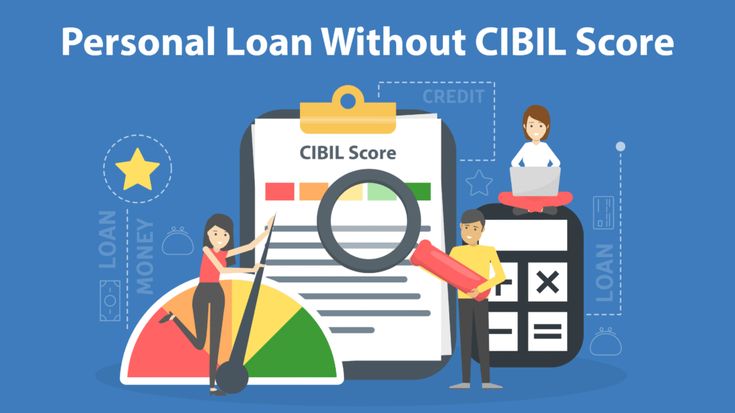
An instant loan without CIBIL is one where an NBFC weighs your income and bank-transaction history more heavily than your credit bureau score. It isn’t a loan with zero checks – RBI’s digital lending rules require every regulated lender to verify identity, disclose all costs upfront, and give you a no-penalty exit window, regardless of your score.
If you’re searching for an instant loan without CIBIL, you likely already know the basics. What’s harder to find is what actually changes based on your score, what protections you’re legally entitled to, and how to decide whether to apply at all – that’s the focus of this guide, rather than another app-by-app rate comparison (see our [personal loan apps without CIBIL score comparison] for that).
Check your eligibility on Olyv
Is There Really an “RBI Approved” Loan App?
No. RBI registers and supervises NBFCs – it doesn’t approve or endorse individual apps. The real question to ask is which NBFC sits behind the app you’re considering. (For the full verification steps and app directory, see our [RBI approved loan apps guide].)
Olyv Expert Insight: Most instant loan apps aren’t the lender themselves – they’re a Lending Service Provider (LSP) acting as the front-end for a bank or NBFC. Two apps that look identical can have completely different underwriting because they’re backed by different NBFCs with different risk appetites. Always check the loan agreement for the actual lending entity’s name, not just the app’s brand name.
What RBI’s Digital Lending Rules Actually Guarantee You
RBI’s Digital Lending Directions (in force since May 2025) tightened borrower protections in ways most people never read – worth knowing before you apply:
- Key Fact Statement (KFS) is mandatory – a standardised cost breakdown including the full APR, before you accept
- A cooling-off period applies – exit by repaying only principal and proportionate interest, no penalty, within this window
- Your credit limit cannot increase automatically – any increase must be requested by you
- Disbursal must go directly into your bank account – not through an LSP pass-through account
- A grievance redressal officer must be appointed, with escalation to RBI’s Complaint Management System if unresolved
Quick checklist – ask for these before you sign:
- Have I received a KFS with the APR clearly stated?
- Do I know the length of my cooling-off period?
- Is disbursal going straight to my own bank account?
- Is there a named grievance contact in the agreement?
How Your CIBIL Score Band Changes Your Options
| CIBIL Score Range | Common Label | What Actually Shifts | Realistic First-Loan Size |
| 300–449 | Very poor / thin file | Approval depends almost entirely on 3–6 months of bank statement behaviour | ₹1,000 – ₹15,000 |
| 450–549 | Poor | Small NBFC loans, shorter tenure, higher scrutiny of existing EMIs | ₹5,000 – ₹25,000 |
| 550–649 | Below average | Wider NBFC choice, moderate documentation | ₹10,000 – ₹75,000 |
| 650–749 | Fair | Most digital lenders compete for you, better pricing | ₹25,000 – ₹2,00,000 |
| 750+ | Good | Banks re-enter the picture, lowest rates | ₹1,00,000+ |
Olyv Expert Insight: Two applicants with an identical 480 CIBIL score can get different outcomes purely based on account behaviour – one with steady salary credits and no bounced payments in 90 days, one with irregular deposits. Lenders read the pattern, not just the number.
Who Typically Uses These Loans
- First-time borrowers with no credit history yet, not necessarily bad credit
- Gig workers and freelancers whose income doesn’t show up as a salary slip
- Self-employed individuals, who can often substitute GST returns or business bank statements for a salary slip
- Students (18+), usually for smaller amounts, sometimes requiring a co-applicant
If you fall into one of these groups, the absence of a strong CIBIL history isn’t automatically disqualifying – it just shifts what the lender looks at instead.
If You Have Collateral, Check This First
An unsecured no-CIBIL loan isn’t always the cheapest way to solve a cash gap. If you hold gold or a fixed deposit, a secured loan against it typically carries a meaningfully lower interest rate and faster processing than an unsecured NBFC loan, precisely because the lender’s risk is collateral-backed rather than score-based. The trade-off is real, though: default risk moves to the asset itself. Worth a two-minute comparison before assuming an unsecured no-CIBIL loan is your only option.
Should You Apply Right Now? A 4-Question Gut-Check
- Can I repay this within the tenure without borrowing again to cover it? If no, a smaller amount or a different source is safer.
- Does my existing EMI-to-income ratio already exceed roughly 40–50%? If yes, approval odds drop and a new loan adds real strain.
- Is this a one-time need or a recurring cash-flow gap? Recurring gaps need a longer-term fix, not repeated short-term loans.
- Have I checked the KFS and total APR, not just the advertised monthly rate? If not, don’t sign yet.
If you answered “no” to Q1 or Q2, pause – stacking a no-CIBIL loan on existing strain is the most common route into a debt cycle, not the loan itself.
NBFC vs Bank Co-Lending: A Distinction Worth Knowing
An NBFC is RBI-registered but can’t accept deposits like a bank. Many “instant loan apps” today run on co-lending models, where a bank funds part of the loan and an NBFC handles origination and servicing.
Why this matters: co-lent loans sometimes carry a blended rate (part bank, part NBFC), which can work out cheaper than a pure NBFC product. It’s worth asking directly whether your loan is co-lent – it isn’t always obvious from the app interface.
Two Real-World Scenarios
Priya, a gig-economy delivery partner, no salary slip, CIBIL 460. Five months of consistent UPI inflows averaging ₹18,000/month. Most NBFC apps will size her first loan around ₹5,000–₹10,000 based on that inflow pattern, not her score, with a shorter 30–60 day tenure.
Rahul, salaried, CIBIL 620, one existing personal loan EMI. His score qualifies him for more lenders, but his existing EMI already uses ~35% of his income. Lenders size the new loan to keep his total EMI obligation under a safe threshold – his sanctioned amount may be lower than his score alone suggests.
Which Apps and Which NBFCs?
For a full app-by-app comparison with interest rates and loan amounts, see our dedicated guide on personal loan apps without CIBIL score. For step-by-step lender verification and the RBI registration check, see our RBI approved loan apps guide. This page focuses on the score-band and decision-making side of the question rather than repeating those comparisons.
What Does It Actually Cost? An Illustrative Range
Rates vary by lender and profile – treat this as a way to sanity-check an offer, not a quote:
| No-CIBIL / Score-Light NBFC Loan | Traditional Bank Personal Loan | |
| Typical APR range | ~14% – 36% p.a.* | ~10% – 20% p.a. |
| Approval basis | Income, bank statements, transaction history | CIBIL score + income |
| Typical processing time | Hours to 1–2 days | Several days to weeks |
| Best fit | Thin/low credit history, urgent need | Established credit history, larger amounts |
*Illustrative only – always confirm the exact APR in your Key Fact Statement.
If your score is closer to the “fair” or “good” bands above, it’s worth checking whether a traditional bank loan actually works out cheaper before defaulting to an NBFC app – the “instant” convenience has a real cost premium attached to it.
Rebuilding Your Score After This Loan
A no-CIBIL loan can be a stepping stone rather than a one-off – if the lender reports to a credit bureau, on-time repayment builds history that improves your terms next time:
- Pay every EMI on or before the due date – this matters more than the loan size
- Avoid applying to multiple lenders within a short window, which can itself look like risk
- Let the loan mature fully rather than closing and reopening similar small loans repeatedly
- Check your score periodically so you can see the effect rather than assuming it
| Document | Why It’s Needed |
| Aadhaar Card | Mandatory identity/address KYC |
| PAN Card | Financial identity verification |
| Bank statement (3–6 months) | Substitutes for score-based assessment |
| Selfie / video KYC | RBI-mandated fraud prevention step |
| Salary slip or alternate income proof | Confirms repayment capacity where available |
| GST returns or business bank statements (self-employed) | Substitutes for salary slip where applicable |
FAQs – Instant Loan Without CIBIL in India
Does “instant loan without CIBIL” mean there’s no verification?
No. Regulated lenders still complete KYC and assess repayment ability using income, bank statements, or transaction history – they simply place less weight on your CIBIL score than traditional lenders.
Can I get a loan with a 450 CIBIL score?
Possibly, though approval isn’t guaranteed. Lenders may evaluate recent bank transactions and repayment obligations; if approved, the initial amount is usually smaller than for stronger credit profiles.
What borrower protection matters most under RBI’s rules?
The Key Fact Statement – it must show the APR, fees, repayment schedule, and total borrowing cost before you accept, making offers genuinely comparable.
Can I get a loan without a salary slip?
Yes, in some cases – certain lenders accept bank statements or business income records instead. Requirements vary by lender.
Will taking this loan affect my credit score?
Yes – on-time EMI payments reported to a bureau can build a positive history; missed payments or default can hurt it and reduce future approval chances.
Actionable Takeaways
- Don’t chase “RBI approved” as a badge – check the actual NBFC name yourself
- Ask for the Key Fact Statement before accepting any offer
- Use the 4-question gut-check before applying, not after
- Start small if your score is under 550 – a clean repayment improves your terms for the next loan
- For app-by-app rate comparisons or lender verification steps, use the dedicated guides linked above rather than relying on score alone
Check your eligibility on Olyv
Disclaimer: This content is for informational purposes only and is not financial advice. Loan approval, amount, interest rate, and eligibility vary by lender and individual profile. Verify all details directly with the lender’s official app, confirm NBFC registration on the RBI website, and borrow only what you can repay comfortably.



It’s great to see how fintech platforms are redefining access to credit by focusing on income stability and transaction behavior rather than just CIBIL scores. This approach can be a lifeline for people with limited credit history or those who’ve had past credit issues. The shift toward alternative risk scoring models is definitely a positive step forward in financial inclusion.