
Closing a personal loan early can reduce future interest and eliminate an EMI, but paying the outstanding amount alone does not always complete the closure process. You need to obtain the lender’s official foreclosure amount, check applicable charges and taxes, make the payment through the approved channel, and collect written proof that the loan has been closed.
This guide explains how to close a personal loan, how personal-loan foreclosure works, whether you can close a loan within two months, personal loan pre-closure charges and GST, the latest RBI rules, HDFC Bank foreclosure charges, SBI closure procedures, NOC requirements and the difference between foreclosure and part-prepayment.
Last updated: July 2026
Important: Prepayment rules and charges can vary by lender, loan type, interest-rate structure, sanction/renewal date and borrower category. Always check your loan agreement, Key Facts Statement (KFS) and the lender’s current fee schedule before making an early repayment.
How to Close a Personal Loan Early
To close a personal loan early, request an official foreclosure or pre-closure statement from the lender, verify the outstanding principal and applicable charges, pay the exact amount through the authorised process, and obtain a loan-closure confirmation and NOC or No Due Certificate.
The process is usually:
- Check your loan agreement and KFS
- Request a foreclosure statement
- Verify the outstanding principal
- Check pre-closure charges and applicable taxes
- Compare the cost of closure with the interest you could save
- Pay the exact foreclosure amount
- Collect the payment receipt
- Obtain the NOC/No Due Certificate or closure letter
- Check your credit report after the lender updates it
Do not assume that adding all remaining EMIs gives you the foreclosure amount. Future interest that has not yet accrued is generally not the same as the outstanding principal.
Personal Loan Pre-Closure vs Foreclosure: What Is the Difference?
Personal loan pre-closure and foreclosure generally refer to repaying the entire outstanding loan before the scheduled maturity date. Part-prepayment is different because only a portion of the principal is repaid early and the loan continues.
The terminology varies between lenders, but the practical distinction is:
| Option | What happens? |
| Normal closure | Loan ends after the scheduled repayment |
| Pre-closure/foreclosure | Entire eligible outstanding amount is repaid early |
| Part-prepayment | Only part of the principal is repaid early |
| Loan transfer | Outstanding loan is moved to another lender under applicable terms |
If your goal is to completely eliminate the EMI, you are generally looking at full foreclosure.
If you want to reduce interest but keep some cash available, part-prepayment may be worth comparing.
Is It Good to Close a Personal Loan Early?
Closing a personal loan early can be beneficial when the interest you save is greater than the applicable foreclosure cost and paying off the loan does not significantly reduce your emergency savings. The decision should be based on total financial benefit rather than simply becoming debt-free sooner.
Early closure may help you:
- Save future interest
- Remove a monthly EMI
- Reduce your outstanding debt
- Improve monthly cash flow
- Reduce your overall debt obligations
However, early repayment is not automatically the best choice.
Consider the following before using your savings to close the loan:
- How much interest remains?
- Is a pre-closure charge applicable?
- Is GST or another tax applicable to the charge?
- How much emergency savings will remain?
- Do you have credit-card or other higher-cost debt?
- Could the money be needed for an upcoming financial obligation?
A simple way to compare
Potential benefit of foreclosure = Future interest avoided − applicable foreclosure costs − applicable taxes/other costs
The lender’s official foreclosure statement should be used for the final payable amount.
Can You Close a Personal Loan Within 2 Months?
A personal loan can potentially be closed within two months if the lender permits early repayment at that stage, but there is no universal two-month rule. The loan agreement may contain a cooling-off period, minimum EMI requirement or applicable pre-closure conditions.
Before trying to close a personal loan within two months, check:
- Whether the first EMI has been paid
- Whether a cooling-off or lock-in condition applies
- Whether premature-closure charges apply
- Whether the lender requires a specific service request
- Whether the lender requires proof of the source of funds
- Whether taxes or other charges apply
Therefore, “Can we close a personal loan within 2 months?” is ultimately determined by the terms applicable to that particular loan.
RBI Rule for Personal Loan Closure and Prepayment Charges
Under RBI’s Pre-payment Charges on Loans Directions, 2025, applicable loans sanctioned or renewed from January 1, 2026 receive specific protection from prepayment charges depending on the loan’s interest-rate type, purpose, borrower and lender category. For floating-rate loans to individuals for non-business purposes, regulated entities generally cannot levy prepayment charges under the specified framework.
The RBI issued the Reserve Bank of India (Pre-payment Charges on Loans) Directions, 2025, which apply to loans and advances sanctioned or renewed on or after January 1, 2026.
For the covered category of floating-rate loans granted to individuals for purposes other than business, the directions prohibit regulated entities from levying prepayment charges. The framework also contains separate provisions for certain floating-rate business-purpose loans to individuals and Micro and Small Enterprises.
Why you should not assume every personal loan has zero foreclosure charges
The answer can change depending on:
- Fixed vs floating interest rate
- Personal/non-business vs business purpose
- Date of sanction or renewal
- Type of regulated lender
- Borrower category
- Specific product terms
The RBI framework therefore does not support the blanket statement that “all personal-loan foreclosure charges are banned.”
If your loan is older, fixed-rate or otherwise outside the applicable no-charge category, check the terms governing that loan.
Personal Loan Pre-Closure Charges and GST
Personal loan pre-closure charges can include a lender’s applicable foreclosure fee and taxes such as GST on the chargeable fee. GST should not automatically be calculated on the entire outstanding principal; check the lender’s foreclosure statement to see exactly what is being charged and taxed.
For example, if a lender applies a 3% foreclosure fee to an eligible outstanding principal of $10,000, the fee would be:
$10,000 × 3% = $300
If applicable GST is charged on that fee, it would be added separately.
This is only an illustration. Your actual charge depends on your lender and loan terms.
Before paying, request a foreclosure statement showing:
- Outstanding principal
- Pre-closure/foreclosure fee
- GST or applicable taxes
- Overdue EMI or interest, if any
- Other outstanding charges
- Total amount payable
- Date until which the quote is valid
This is why the keyword “personal loan pre-closure charges GST” is important: the percentage shown for foreclosure may not necessarily represent the complete amount required to close the account.
How to Calculate Personal Loan Foreclosure Cost
The cost of closing a personal loan early depends on the outstanding principal, applicable foreclosure charges, taxes and any other legitimate dues. The final amount should always be confirmed through the lender’s official foreclosure statement.
A simplified calculation is:
Total foreclosure amount = Outstanding principal + applicable foreclosure fee + applicable GST/taxes + other dues
The actual saving from early closure can then be estimated as:
Net benefit = Future interest avoided − foreclosure costs − applicable taxes/other costs
Example
Suppose:
- Outstanding principal = $10,000
- Applicable foreclosure fee = 3%
- Fee = $300
If applicable tax is added to the fee, your total cost will be higher than $10,000 + $300.
The important point is that you should not use a generic online percentage to calculate the amount you need to pay. Ask the lender for a dated foreclosure quote.
HDFC Personal Loan Foreclosure Charges
HDFC Bank’s currently published personal-loan schedule lists premature-closure charges of 4% of principal outstanding up to 24 EMI repayments, 3% after 24 and up to 36 EMI repayments, and 2% after 36 EMI repayments, subject to applicable terms and taxes.
HDFC Bank’s current July 2026 fee schedule states:
| Repayment stage | Full premature-closure charge |
| Up to 24 EMI repayments | 4% of principal outstanding |
| More than 24 and up to 36 EMI repayments | 3% of principal outstanding |
| More than 36 EMI repayments | 2% of principal outstanding |
HDFC Bank states that applicable government taxes and other levies are charged over and above the listed fees.
These figures should not be treated as universal personal-loan foreclosure rates. They are HDFC Bank’s currently published terms and should be checked against your specific loan documents.
HDFC Personal Loan Foreclosure Online: How to Request Closure
For HDFC personal-loan foreclosure, customers should register the applicable service request, obtain the official foreclosure amount and then follow the bank’s prescribed payment process. HDFC Bank currently provides an online token route for registering a personal-loan foreclosure service request.
A practical process is:
- Access HDFC Bank’s official service channel.
- Register the personal-loan foreclosure request.
- Obtain the foreclosure statement.
- Check the outstanding principal and applicable charges.
- Confirm the payment amount and validity date.
- Make the payment through the prescribed method.
- Obtain confirmation that the account has been closed.
HDFC Bank’s current fee page specifically instructs customers to register a service request for personal-loan foreclosure and provides an online token option.
What about “HDFC Loan Foreclosure online login”?
Avoid relying on old third-party instructions for an HDFC Loan Foreclosure online login. Banking interfaces and service-request flows can change. Use the bank’s current authenticated channel and verify the foreclosure request against your loan account.
HDFC Personal Loan Foreclosure Request: What Details May Be Needed?
An HDFC personal-loan foreclosure request requires enough information for the bank to identify the loan account and calculate the applicable closure amount. The exact documentation or verification required can depend on the account and service channel.
Keep these details available:
- Loan account number
- Registered mobile number
- Customer identification details
- Loan statement
- Identity documents where requested
- Proposed closure date
- Payment information
HDFC Bank’s own closure guidance also highlights the importance of the loan account number, identity proof and loan-related documents when completing closure formalities.
HDFC Personal Loan Foreclosure Charges Waiver: Is It Possible?
An HDFC personal-loan foreclosure charge waiver should not be assumed as a standard entitlement. Whether any waiver, exemption or concession applies depends on the specific product, loan terms, applicable regulations and the bank’s policy.
If you believe a charge should not apply, ask the bank to confirm:
- Why the charge applies
- Whether your loan is covered by an RBI no-prepayment-charge provision
- Whether your interest rate qualifies for an exemption
- Whether your product has special foreclosure terms
- Whether any waiver or concession is available
Always request the final amount in writing before making payment.
Personal Loan Close Application: What Should You Write?
A personal loan close application should identify the loan account, request early closure and ask the lender to provide the official foreclosure amount and payment procedure. After payment, request written closure confirmation and the applicable NOC or No Due Certificate.
A simple request can state:
I request you to provide the foreclosure amount for my personal loan account as of the proposed closure date, along with all applicable charges and taxes. Please share the required payment procedure and issue the relevant loan-closure confirmation and No Due Certificate after full repayment.
An application or email is only a request to initiate the process. The loan is not considered closed until the lender confirms that the applicable dues have been fully settled.
SBI Personal Loan Close Application: What Should You Know?
For an SBI personal-loan closure, the borrower should follow SBI’s current official servicing process, request the exact foreclosure amount and complete the lender’s required closure formalities. The specific process and charges depend on the loan agreement and applicable SBI terms.
If you are searching for personal loan close application SBI, focus on these steps:
- Identify the loan account.
- Request the applicable foreclosure amount.
- Confirm charges and taxes.
- Make the payment using the approved method.
- Obtain closure confirmation.
- Request the applicable NOC/No Due Certificate.
- Verify the loan’s status on your credit report.
Do not assume that a generic “loan closure application” found online will complete SBI’s internal closure process.
Is NOC Required After Personal Loan Closure?
You should obtain an NOC, No Due Certificate or equivalent written closure confirmation after fully repaying a personal loan. It provides evidence that the lender has no outstanding dues against the closed loan account.
The lender may call the document:
- NOC
- No Due Certificate
- No Dues Certificate
- Loan Closure Certificate
- Closure Letter
The terminology differs between lenders.
Why is the NOC important?
Keep it because it can help you:
- Prove that the loan was fully repaid
- Resolve future disputes
- Correct credit-reporting errors
- Maintain your financial records
- Confirm that the account is officially closed
NOC Kaise Milega Loan Band Hone Ke Baad?
NOC kaise milega loan band hone ke baad? After the lender receives the full foreclosure amount and closes the account, request the NOC or No Due Certificate through the lender’s applicable service channel and retain a copy for your records.
The usual sequence is:
Loan payment → account closure → closure confirmation → NOC/No Due Certificate → credit-report update
Do not assume that a payment receipt is the same as an NOC.
Personal Loan Band Karne Ka Tarika: Step-by-Step
Personal loan band karne ka tarika is to first request the foreclosure statement, verify the outstanding amount and applicable charges, pay through the lender’s authorised channel, and collect the NOC or No Due Certificate after the account is formally closed.
Agar aap loan foreclosure kaise kare ya personal loan pre close kaise kare search kar rahe hain, follow this sequence:
- Loan agreement check karein.
- Foreclosure statement maangiye.
- Outstanding principal verify karein.
- Charges aur GST/taxes check karein.
- Interest saving compare karein.
- Exact amount pay karein.
- Payment receipt rakhein.
- NOC/No Due Certificate maangiye.
- Credit report mein “Closed” status verify karein.
This is the practical loan foreclosure kaise kare process, regardless of whether you use the lender’s online or offline channel.
Foreclosure vs Part-Prepayment: Which Is Better?
Foreclosure closes the entire personal loan, while part-prepayment reduces the principal but leaves the loan active. Full closure may save more future interest, whereas part-prepayment can reduce interest while preserving some emergency cash.
| Factor | Full foreclosure | Part-prepayment |
| Loan status | Closed | Active |
| EMI | Ends | Continues unless lender restructures it |
| Future interest | Generally eliminated after closure | Reduced |
| Cash requirement | Higher | Lower |
| NOC | Applicable after closure | Not applicable as final closure |
| Charges | May apply | May apply |
Choose based on your interest savings, charges, emergency fund and cash-flow needs, rather than simply choosing the option that removes debt fastest.
What Happens to Your Credit Score After Personal Loan Closure?
Closing a personal loan does not guarantee an immediate increase in your credit score. The effect depends on your overall credit history, repayment behaviour, outstanding debt, credit mix and how the lender reports the closed account.
After closure:
- Check that the loan is reported as Closed
- Confirm there is no outstanding balance
- Look for overdue amounts that should not be there
- Retain your NOC and closure statement
- Raise a correction request if the information is inaccurate
A properly closed loan is preferable to leaving a fully repaid account incorrectly marked as active or overdue.
Loan Against Property Foreclosure Charges vs Personal Loan
Loan against property foreclosure charges can differ substantially from personal-loan charges because the loan is secured against property and may have different rate, purpose, borrower and regulatory conditions. Never assume that a personal-loan foreclosure rule automatically applies to a loan against property.
For example, HDFC Bank’s current loan-against-property schedule has different prepayment treatment based on factors including interest type, borrower category, business/non-business purpose and sanction/disbursement timing.
This is why a dedicated loan against property foreclosure charges guide should be treated as a separate topic rather than duplicating the personal-loan section.
Business Loan Foreclosure Charges: Are They the Same?
Business loan foreclosure charges are not necessarily the same as personal-loan charges. The applicable fee can depend on the lender, rate type, loan structure, borrower classification, sanctioned amount and applicable RBI rules.
For example, HDFC Bank’s current business-loan schedule lists different premature-closure terms for term loans and overdraft facilities, and separately identifies certain exemptions for eligible Micro and Small Enterprises.
If you operate a business, compare the business loan foreclosure charges in your sanction letter and KFS rather than applying a personal-loan rule to the business facility.
Personal Loan Closure Mistakes to Avoid
The most common personal-loan closure mistakes are paying without an official foreclosure statement, overlooking applicable charges and GST, failing to collect closure documents, and not checking whether the credit report has been updated correctly.
Avoid these mistakes:
1. Calculating the foreclosure amount yourself
Use the lender’s official quote.
2. Assuming all foreclosure charges are illegal
RBI’s rules depend on the loan’s characteristics and applicability.
3. Ignoring GST or other taxes
A fee and the tax applicable to that fee can be separate components.
4. Paying through an unauthorised channel
Use the lender’s official payment process.
5. Not obtaining an NOC
Keep written evidence of closure.
6. Forgetting the credit-report update
Check that the account is eventually marked closed.
7. Using all your savings to become debt-free
Do not sacrifice an adequate emergency reserve merely to eliminate a low-cost remaining liability.
Personal Loan Closure Checklist
A personal loan is properly closed when the full applicable foreclosure amount has been paid, the lender confirms zero outstanding dues, closure documents are obtained and the loan is correctly reported as closed on your credit report.
| Check | Status |
| Loan agreement/KFS checked | ☐ |
| Foreclosure statement received | ☐ |
| Outstanding principal verified | ☐ |
| Foreclosure fee checked | ☐ |
| GST/taxes checked | ☐ |
| Total payment confirmed | ☐ |
| Payment receipt saved | ☐ |
| Loan closure confirmation received | ☐ |
| NOC/No Due Certificate received | ☐ |
| Credit report checked | ☐ |
Personal Loan Closure FAQs
How to close a personal loan?
Request a foreclosure statement, verify the principal and applicable charges, pay the exact amount through the lender’s approved process and obtain closure confirmation and an NOC or No Due Certificate.
Is it good to close a personal loan early?
It can be beneficial when the interest saved exceeds the cost of early repayment and you retain enough emergency savings after closure.
Can I close my personal loan within 2 months?
It depends on the applicable loan terms, repayment conditions, interest-rate structure and lender process. Check the foreclosure conditions before paying early.
What is the RBI rule for personal loan foreclosure?
RBI’s 2025 directions, applicable to loans sanctioned or renewed from January 1, 2026, prohibit prepayment charges for specified floating-rate loans to individuals for non-business purposes. Other loan categories can have different treatment.
What are personal loan pre-closure charges GST?
A lender may have an applicable pre-closure fee and taxes such as GST on the chargeable fee. The exact amount should be confirmed through the lender’s official foreclosure statement.
Is NOC required after loan closure?
You should obtain an NOC, No Due Certificate or equivalent written closure confirmation after full repayment.
How to close personal loan early?
Get the foreclosure quote, verify charges and taxes, pay the exact amount, obtain closure confirmation and collect the NOC.
What are HDFC personal loan foreclosure charges?
HDFC Bank’s currently published schedule lists 4% up to 24 EMI repayments, 3% after 24 and up to 36 EMI repayments, and 2% after 36 EMI repayments, subject to applicable terms and taxes.
Can HDFC personal loan foreclosure charges be waived?
A waiver should not be assumed. Ask HDFC Bank whether an exemption, waiver or concession applies to your specific loan.
How do I make an HDFC personal loan foreclosure request online?
HDFC Bank currently directs customers to register a service request for personal-loan foreclosure and provides an online token route. Follow the bank’s current official process.
How do I submit a personal loan close application to SBI?
Follow SBI’s current official loan-servicing process, request the applicable foreclosure amount and complete the required closure formalities.
How do I get an NOC after closing a loan?
After the lender confirms full repayment and closes the account, request the applicable NOC, No Due Certificate or closure letter through its official service channel.
Does closing a personal loan improve CIBIL?
Not automatically. Closing the account can change your credit profile, but your score depends on your overall repayment history, utilisation, credit mix and other factors.
Final Takeaway: How to Close a Personal Loan Correctly
The correct way to close a personal loan is to request an official foreclosure statement, verify the outstanding principal and applicable charges, check whether RBI prepayment protections apply, pay through the lender’s authorised channel, collect the NOC or No Due Certificate and confirm the loan is reported as closed.
Use this simple sequence:
Check loan terms → Request foreclosure statement → Verify charges and GST → Compare interest savings → Pay exact amount → Get closure confirmation → Collect NOC → Check credit report
The key is not simply to pay off the loan early, but to complete the entire closure process correctly and keep documentary proof.
Disclaimer: Brand and bank names mentioned here are used only for informational and comparison purposes. They do not indicate endorsement, affiliation, sponsorship, or partnership. Fees, rates, eligibility and other terms may change, so verify current details with the respective lender before proceeding.
Last Updated: July 2026
Reviewed By: Shree Lahari (Senior Marketing Associate “Olyv”)



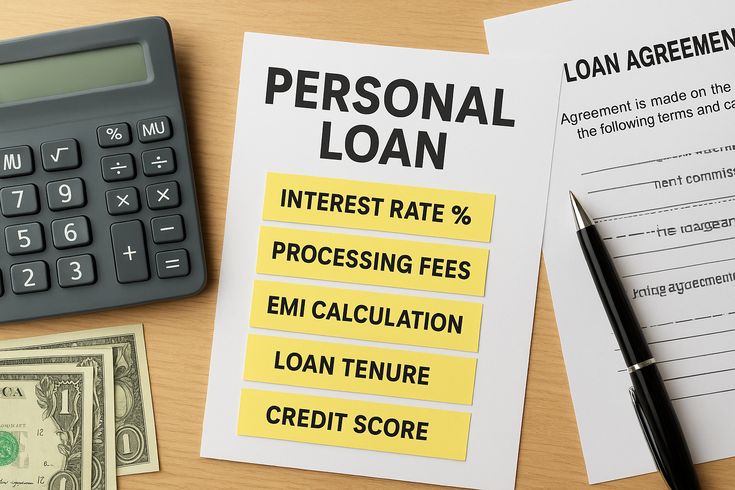
This checklist is a helpful reminder that paying off a loan isn’t the end of the process. Taking the extra step to verify closure and update your credit report can prevent headaches when applying for future loans.