Your Equifax credit score is a three-digit number that summarises information in your credit history and can be one of the factors lenders consider when assessing a credit application. In India, Equifax is one of the four credit information companies regulated by the Reserve Bank of India, alongside TransUnion CIBIL, Experian and CRIF High Mark.
What Is an Equifax Credit Score?
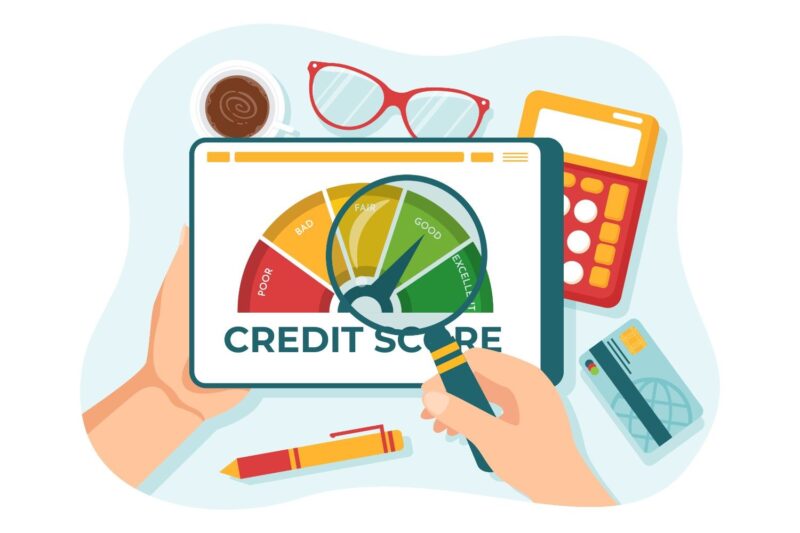
An Equifax credit score is a numerical representation of your credit history, generally expressed on a scale from 300 to 900 in India. A higher score generally indicates a stronger credit profile, while a lower score may make borrowing more difficult or expensive.
The score is generated from information in your credit file, such as repayment behaviour, credit accounts, outstanding balances and credit enquiries. Lenders can consider this information along with income, existing obligations and their own eligibility criteria when assessing a loan or credit-card application.
Your score is therefore not a guarantee of loan approval. Two people with a similar Equifax score can receive different decisions because their income, debt obligations, employment profile, loan amount and lender criteria may differ.
Equifax Credit Score Range: What Does 300 to 900 Mean?
The Equifax credit score range in India is 300 to 900. A score closer to 900 generally represents a stronger credit profile, while a score closer to 300 indicates greater credit risk. The exact cut-off a lender uses for approval is determined by its own credit policy.
| Equifax score range | General interpretation | What it may mean |
| 300–579 | Low | Credit may be harder to obtain and lenders may apply stricter conditions |
| 580–669 | Fair | Credit history may need improvement |
| 670–739 | Good | Generally reflects a reasonably healthy credit profile |
| 740–799 | Very good | Usually indicates stronger repayment and credit behaviour |
| 800–900 | Excellent | Generally represents a strong credit profile |
These bands are useful for understanding your position, but they are not official universal lending cut-offs. Each lender can use its own risk model.
Is a 730 Equifax Score Good?
A 730 Equifax score is generally considered a good score, although it does not guarantee loan approval. Lenders may also consider income, existing EMIs, repayment capacity, credit history and the type of credit being requested.
For example, a borrower with a 730 score and manageable debt may receive a different offer from someone with the same score but several recent loan applications and high outstanding balances.
Is an 800 Equifax Score Good?
Yes. An Equifax score of 800 is generally considered excellent within the 300–900 range and indicates a strong credit profile. However, lenders still assess the complete application rather than approving credit based on the score alone.
Equifax Credit Score Meaning: What Does Your Score Tell You?
Your Equifax score is best understood as a summary of your credit behaviour, not a financial-health score for your entire life.
A strong score can indicate that you have historically managed credit responsibly. A lower score can signal issues such as missed payments, high balances, a short credit history or frequent recent applications.
For example:
- Paying EMIs on time can support a healthier credit history.
- Repeated missed payments can negatively affect your profile.
- Using a large portion of available revolving credit can indicate higher credit dependence.
- Applying for several credit products within a short period can create multiple enquiries.
- Closing an account does not necessarily erase its historical information from your credit file.
The most useful way to interpret an Equifax score is alongside the credit report behind the number.
How Is an Equifax Credit Score Calculated?
An Equifax credit score is derived from information in your credit history, including repayment behaviour, credit utilisation, account history, outstanding credit and recent credit activity. The exact scoring methodology and weighting used by the bureau are proprietary.
Key factors to understand include:
| Credit factor | Why it matters |
| Repayment history | Shows whether credit obligations have been paid on time |
| Credit utilisation | Indicates how much of available revolving credit is being used |
| Credit history | Provides context about how long and consistently you have managed credit |
| Outstanding balances | Shows current debt obligations |
| Credit enquiries | Reflects recent applications for credit |
| Credit accounts | Provides information about active and closed credit facilities |
No single factor should be treated as a guaranteed formula for a particular score.
What Is Credit Utilisation? Example With ₹1 Lakh Limit
Credit utilisation is the percentage of your available revolving credit that you are currently using. For example, if your total credit limit is ₹1,00,000 and your outstanding balance is ₹30,000, your utilisation is 30%.
The calculation is:
Credit utilisation = Outstanding balance ÷ Total credit limit × 100
Example:
- Total available limit: ₹1,00,000
- Outstanding balance: ₹30,000
- Utilisation: ₹30,000 ÷ ₹1,00,000 × 100
- Utilisation ratio: 30%
Keeping balances manageable can help maintain a healthier credit profile. However, there is no single utilisation percentage that guarantees a particular Equifax score.
Equifax Credit Score vs CIBIL: What’s the Difference?
Equifax and CIBIL are different credit information companies. Both maintain credit information and provide credit reports and scores, but their scoring models and databases can differ, so the scores shown by the two bureaus may not always be identical.
| Factor | Equifax | CIBIL |
| Type | Credit Information Company | Credit Information Company |
| India score range | Generally 300–900 | Generally 300–900 |
| Credit report | Yes | Yes |
| Credit score | Yes | Yes |
| Data source | Reporting credit institutions | Reporting credit institutions |
| Score comparison | Can differ from CIBIL | Can differ from Equifax |
What Is the Difference Between Equifax and CIBIL?
The main difference is that Equifax and CIBIL are separate credit bureaus with their own systems and scoring methodologies. Your lenders may report information to credit information companies, and differences in data updates, reporting and scoring models can result in different scores.
There is therefore no universal rule that one bureau’s score is always “better” or more accurate than another.
What Are the Four Credit Bureaus in India?
The four credit information companies operating in India are TransUnion CIBIL, Equifax, Experian and CRIF High Mark. RBI identifies these as credit information companies regulated under the applicable credit-information framework.
They collect credit information reported by member credit institutions and provide credit information reports and related services.
This is why your credit information can appear across multiple bureaus, and the details may not always update at exactly the same time.
Equifax Credit Score Check: How Can You Check Your Score?
You can check your Equifax credit information through an authorised Equifax service or other legitimate credit-report provider. Before relying on a score, check the accompanying report for account details, repayment history, enquiries and any errors.
If you want to understand your overall credit position first, use Olyv’s credit score checking guide to learn what to review when checking your credit profile.
A useful checking routine is:
- Verify your name and personal details.
- Review all active and closed credit accounts.
- Check repayment history for missed or delayed payments.
- Look at outstanding balances and account status.
- Review recent credit enquiries.
- Check whether any account belongs to you incorrectly.
- Raise a dispute if you find inaccurate information.
How to Check Equifax Credit Score Online
To check your Equifax credit score online, use an authorised service, complete the required identity verification and access your credit information securely. Avoid entering PAN, Aadhaar, OTP or banking information into unofficial websites or messaging accounts.
Your credit report is more useful when you read it alongside the score. A score tells you where you stand; the report helps explain why.
If your goal is to understand your borrowing eligibility after checking your profile, you can also read Olyv’s personal loan eligibility guide.
Equifax Free Credit Report: Can You Get One?
Individuals with a credit history can obtain one free full credit report, including the credit score, once in a calendar year from any of the four credit information companies, subject to the applicable RBI framework.
That means you should distinguish between:
- A credit score — the numerical score.
- A credit report — the detailed record behind the score.
- A free full credit report — the report available under the applicable regulatory framework.
If you are checking your report for the first time, don’t stop at the number. Review the account information and repayment history for accuracy.
Equifax India Free Credit Report: What Should You Check?
When you receive your report, look for:
- Personal information that does not belong to you
- Incorrect loan or credit-card accounts
- Incorrect outstanding balances
- Missed payments that you actually paid on time
- Accounts shown as active after closure
- Duplicate accounts
- Unrecognised credit enquiries
- Incorrect dates or account-status information
If you find inaccurate information, contact the relevant credit information company and/or the institution that supplied the data and follow the applicable dispute process.
RBI directions require credit information companies to keep information updated and accurate, and the current framework also provides for more frequent reporting of credit information.
Equifax Credit Score Login: What Should You Know?
Use only the official or authorised Equifax route when accessing your credit information. A genuine login or verification process should not require you to share OTPs, passwords or sensitive banking credentials with another person.
Before entering personal information:
- Check the website address carefully.
- Avoid links received from unknown senders.
- Never share an OTP with someone claiming to “unlock” your score.
- Don’t pay an unknown person to “repair” or “increase” your score instantly.
Equifax Credit Score WhatsApp Number: Is It Safe to Share Your Details?
Be cautious of anyone offering an Equifax credit score through an unknown WhatsApp number and asking for an OTP, UPI payment, card details or banking credentials. Use an official Equifax channel or a trusted authorised service instead.
A credit score cannot legitimately be improved simply by paying an individual to delete accurate negative information.
If someone claims they can increase your score immediately for a fee, treat the claim as a warning sign.
Which Bank Uses Equifax in India?
There is no single public list of banks that exclusively use Equifax for every lending decision. Financial institutions can use credit information from credit information companies according to their reporting and credit-assessment arrangements.
RBI’s framework recognises four credit information companies in India, and lenders can use credit information as part of their assessment.
Therefore, searching for a single “bank that uses Equifax” can be misleading. What matters to a borrower is the lender’s current eligibility criteria and the information contained in the credit report being assessed.
How to Improve Your Equifax Credit Score
The most reliable way to improve your Equifax credit profile is to pay EMIs and credit-card dues on time, keep outstanding balances manageable, avoid unnecessary credit applications and check your credit report for errors.
Practical steps include:
- Pay every EMI and credit-card bill by its due date.
- Keep credit utilisation under control.
- Avoid applying for multiple loans or cards unnecessarily.
- Maintain older accounts responsibly where appropriate.
- Monitor your credit report periodically.
- Dispute inaccurate information promptly.
- Reduce overdue balances rather than taking unnecessary new debt.
There is no guaranteed number of days or months in which a score will increase. Improvement depends on what caused the score to fall and how your subsequent credit behaviour is reported.
Does Checking Your Equifax Score Affect Your Credit Score?
Checking your own credit report or score does not work the same way as applying for new credit. A lender’s credit enquiry during a loan or credit-card application can be recorded separately from a consumer checking their own report.
Before submitting multiple loan applications, understand whether the service is performing an eligibility check or a formal credit enquiry.
Equifax Credit Score vs Credit Report: What’s the Difference?
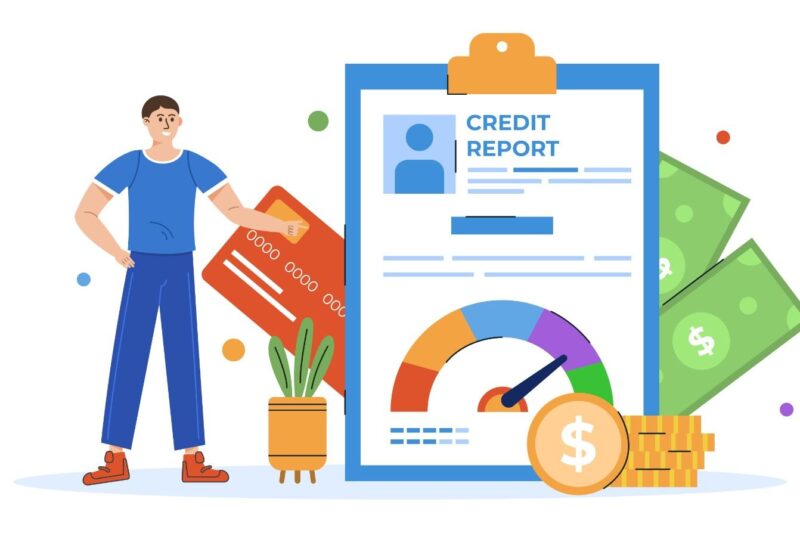
Your Equifax credit score is the numerical summary of your credit profile, while the Equifax credit report contains the underlying credit information used to understand that profile.
Think of it this way:
Score = summary number
Report = detailed record
For example, a score may tell you that your profile is weaker than expected. The report can reveal that the reason is a missed EMI, high utilisation, an incorrect account or several recent enquiries.
That is why reviewing only the score can leave out important information.
Can a Good Equifax Score Guarantee a Loan?
No. A good Equifax score does not guarantee loan approval. Lenders can also consider income, employment, existing obligations, repayment capacity, loan amount, internal policies and other information when evaluating an application.
A strong credit score is helpful, but it is only one part of a credit decision.
FAQs About Equifax Credit Score
What is an Equifax credit score?
An Equifax credit score is a numerical summary of information in your credit history. In India, the score is generally represented on a 300–900 scale, with higher scores generally indicating a stronger credit profile.
What’s a good credit score for Equifax?
A score of 740 or above is generally viewed as strong, while 800–900 is commonly interpreted as excellent. However, lenders set their own credit policies and score requirements.
Is a 730 Equifax score good?
Yes. A 730 Equifax score is generally considered good, but loan approval also depends on income, debt, repayment capacity and the lender’s assessment.
What is a poor Equifax score?
A score below 580 is generally considered a weaker credit range, but there is no universal Equifax score cut-off that automatically defines someone as a poor borrower.
What is the difference between Equifax and CIBIL?
Equifax and CIBIL are separate credit information companies. Their scores can differ because they may have different data updates and use different scoring methodologies.
Is Equifax score the same as CIBIL score?
No. Equifax and CIBIL scores are not necessarily identical. Both assess credit information, but each bureau operates its own systems and scoring methodology.
Which bank uses Equifax in India?
There is no single bank that can be identified as the exclusive Equifax-using bank for all lending decisions. Financial institutions may use credit information from authorised credit information companies as part of their assessment.
Can I get an Equifax credit score free?
Eligible individuals can obtain a free full credit report including their credit score once a year from any of the four credit information companies under the applicable RBI framework.
How can I improve my Equifax credit score?
Pay your dues on time, keep credit utilisation manageable, avoid unnecessary credit applications, maintain responsible credit accounts and correct errors in your credit report.
Does checking my Equifax score reduce my score?
Checking your own credit information is different from a lender making a credit enquiry when you apply for new credit. Review the terms of the service and understand what type of enquiry is being performed.
How often is credit information updated?
Credit information is reported and updated according to the applicable reporting framework and arrangements between credit institutions and credit information companies. RBI’s current directions provide for more frequent reporting, including fortnightly updates under the applicable framework.
Key Takeaways
Your Equifax credit score is useful, but the number should never be viewed in isolation.
Remember these points:
- 300–900 is the Equifax score range used in India.
- A higher score generally indicates a stronger credit profile.
- 730 is generally a good score; 800+ is generally excellent.
- Equifax and CIBIL are different bureaus, so their scores may differ.
- India has four RBI-regulated credit information companies: CIBIL, Equifax, Experian and CRIF High Mark.
- Review your complete credit report, not just your score.
- Individuals with credit history can obtain a free full credit report including score once a year from any of the four CICs under the applicable framework.
- Never share OTPs or banking credentials with anyone promising to increase your score.
- A good score can help your credit profile but does not guarantee loan approval.
Sources and further reading: RBI’s credit-information guidance and the applicable information published by authorised credit information companies should be used for the latest regulatory and report-access details.
Last Updated: July 2026
Reviewed By: Shree Lahari (Senior Marketing Associate “Olyv”)