

Every time you borrow money or apply for a credit card, the lender does not merely consider your income. They evaluate something called credit risk. But what is credit risk, and why is it so important when it comes to loan approvals?
In simple terms, is the risk of a borrower not repaying a loan on time. Every lender, whether it is a bank, an NBFC, or a fintech company, calculates this risk before approving a loan.
In this tutorial, we will discuss about the credit risk, describe the credit risk assessment process, define the meaning of credit risk management, and illustrate how credit risk affects loan approvals and interest rates in India.
What Is Credit Risk?
Let’s start with the basic definition.
It refers to the possibility of the borrower not repaying the amount as agreed. If the borrower defaults on the payment of EMIs or the entire amount, the lender incurs a loss of money.
For instance:
Suppose a bank lends ₹5,00,000 as a personal loan to a customer. If the customer stops paying after 3 months, the bank incurs a loss.
The greater the possibility of default, the greater the risk.
Banks and other lenders always try to reduce the risk to a minimum while still providing loans to eligible customers.
Why Credit Risk Matters to Lenders
Lending money is a business of trust and probability. If the lender lends too many loans to high-risk customers, they may incur significant losses. If they reject too many customers, they will have fewer customers.
That’s why understanding credit risk management meaning is crucial.This refers to the strategies and systems that lenders use to measure, control, and reduce the risk of default by the borrower.
Key Factors That Influence It
Lenders consider several factors while assessing risk:
- Credit score
- Income stability
- Employment type
- Existing loans
- EMI-to-income ratio
- Repayment history
- Number of recent credit inquiries
- Financial behavior patterns
Each factor helps lenders estimate repayment capacity.
Credit Risk Assessment Process Explained
Now let’s understand the credit risk assessment process step by step.
1️. Application Review
The borrower submits income details, employment information, and identity documents.
2️. Credit Report Analysis
Lenders check the credit bureau score and past repayment record.
3️. Income & Expense Evaluation
They assess salary consistency, business cash flow, and monthly obligations.
4️. Risk Scoring Model
An internal scoring system calculates risk based on various parameters.
5️. Decision & Pricing
Based on the risk level, the lender decides:
- Approve or reject
- Loan amount
- Interest rate
- Tenure
This structured credit risk assessment process ensures objective decision-making.
How Risk Levels Affect Interest Rates
Higher credit risk usually means higher interest rates. Lower risk leads to better terms.
Here is an illustrative table:
| Credit Risk Level | Example Credit Score | Default Probability (Illustrative) | Likely Interest Rate Range |
| Low Risk | 750+ | 1–2% | 10% – 12% |
| Moderate Risk | 700–749 | 3–5% | 12% – 16% |
| High Risk | 650–699 | 6–10% | 16% – 22% |
| Very High Risk | Below 650 | 10%+ | 22%+ or Rejection |
Note: Figures are indicative for understanding only.
This shows how your risk category directly impacts borrowing cost.
Types of Credit Risk
To understand credit risk management meaning, we must also understand its types.
1️. Default Risk
The borrower fails to repay the loan completely.
2️. Concentration Risk
Too many loans given to one sector or borrower group.
3️. Country Risk
Risk arising from economic or political instability.
4️. Operational Risk
Errors in risk evaluation systems.
Each lender designs strategies to handle these risks.
How Lenders Manage It
Now that we understand what is credit risk, let’s explore how lenders manage it.
Credit Scoring Models
Banks and fintech companies use automated systems to assign risk scores.
Diversification
They distribute loans across industries and customer segments.
Collateral
Secured loans reduce risk because assets back the loan.
Risk-Based Pricing
Higher-risk borrowers pay higher interest.
Monitoring Systems
Lenders track repayment patterns regularly.
This entire framework reflects the practical credit risk management meaning in action.
Role of Technology in The Risk Assessment
Digital lending has changed how risk is measured.
Modern systems analyze:
- Bank transaction patterns
- Income stability trends
- Spending behavior
- Digital payment activity
Fintech platforms and financial service applications such as Olyv use technology-based evaluation systems to better understand borrower profiles. This is done more efficiently by using technology-based evaluation systems rather than relying solely on manual evaluation.
Technology assists in
- Reduce human bias
- Detect fraud faster
- Approve loans quickly
- Improve customer experience
How Borrowers Can Reduce Credit Risk Perception
Since it affects approval and interest rates, borrowers should actively manage their profile.
Here are simple steps:
Maintain Timely EMI Payments
Payment history has the strongest impact.
Keep Credit Utilization Low
Use less than 30–40% of your available credit limit.
Avoid Frequent Loan Applications
Too many hard inquiries increase risk perception.
Maintain Stable Income
Frequent job changes may signal instability.
Monitor Credit Report Regularly
Correct errors early.
Reducing risk perception improves loan terms.
Credit Risk vs Credit Score: Are They the Same?
Many people think credit score and credit risk are identical. They are related but not the same.
- A credit score is a numerical representation of your credit behavior.
- It is the overall probability of default, calculated using multiple factors.
The score is one input in the larger credit risk assessment process.
Example Scenario
Let’s consider two borrowers:
Borrower A
- Salary: ₹60,000 per month
- Credit Score: 780
- No late payments
- Low credit utilization
Risk Level: Low
Likely Outcome: Quick approval with lower interest.
Borrower B
- Salary: ₹60,000 per month
- Credit Score: 660
- Two missed EMIs in last year
- High credit card usage
Risk Level: Moderate to High
Likely Outcome: Higher interest or reduced loan amount.
Even with the same salary, credit behavior changes risk assessment.
Why Understanding Credit Risk Matters for You
When you know about the risk, you understand why:
- Loans get rejected
- Interest rates vary
- Loan amounts are reduced
- Processing takes longer
Instead of feeling confused after rejection, you can improve your financial profile strategically.
The Future of Credit Risk Management in India
India’s lending ecosystem is becoming more data-driven.
We are seeing:
- AI-based risk scoring
- Real-time income analysis
- Faster loan approvals
- More personalized pricing
- Greater financial inclusion
Digital platforms are also improving the assessment process, making lending more efficient and transparent.
Final Thoughts
So, what is credit risk? It is the likelihood that a borrower may not repay a loan as agreed
The risk assessment process helps lenders evaluate repayment capacity through credit history, income stability, and financial behavior. Meanwhile, the credit risk management meaning refers to the systems and strategies lenders use to minimize default risk.
For borrowers, the key takeaway is simple:
- Pay EMIs on time
- Maintain a healthy credit score
- Avoid excessive debt
- Apply for loans responsibly
Managing your financial behavior not only reduces credit risk but also improves your access to better loan terms.
Understanding this empowers you to make smarter borrowing decisions and build long-term financial stability.

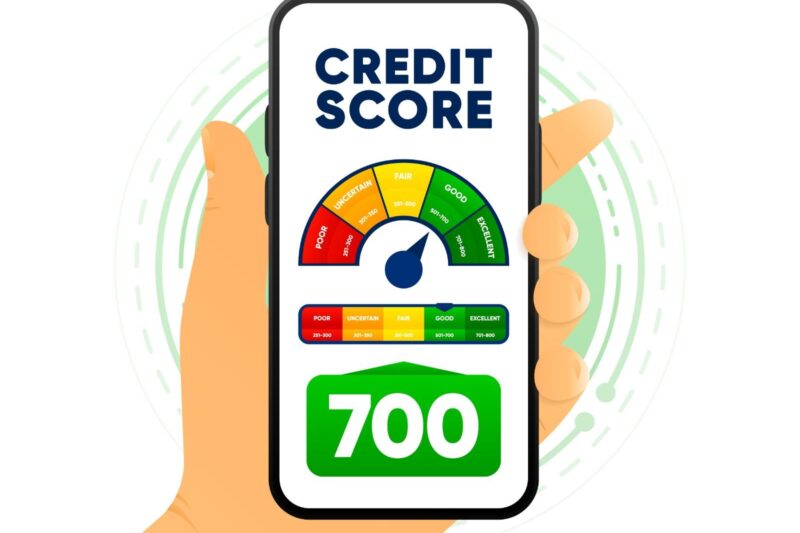
Understanding credit risk is essential for lenders because it directly influences loan approval and the interest rates offered. It’s interesting to see how lenders balance the risk of default with the need to remain competitive in the market.