
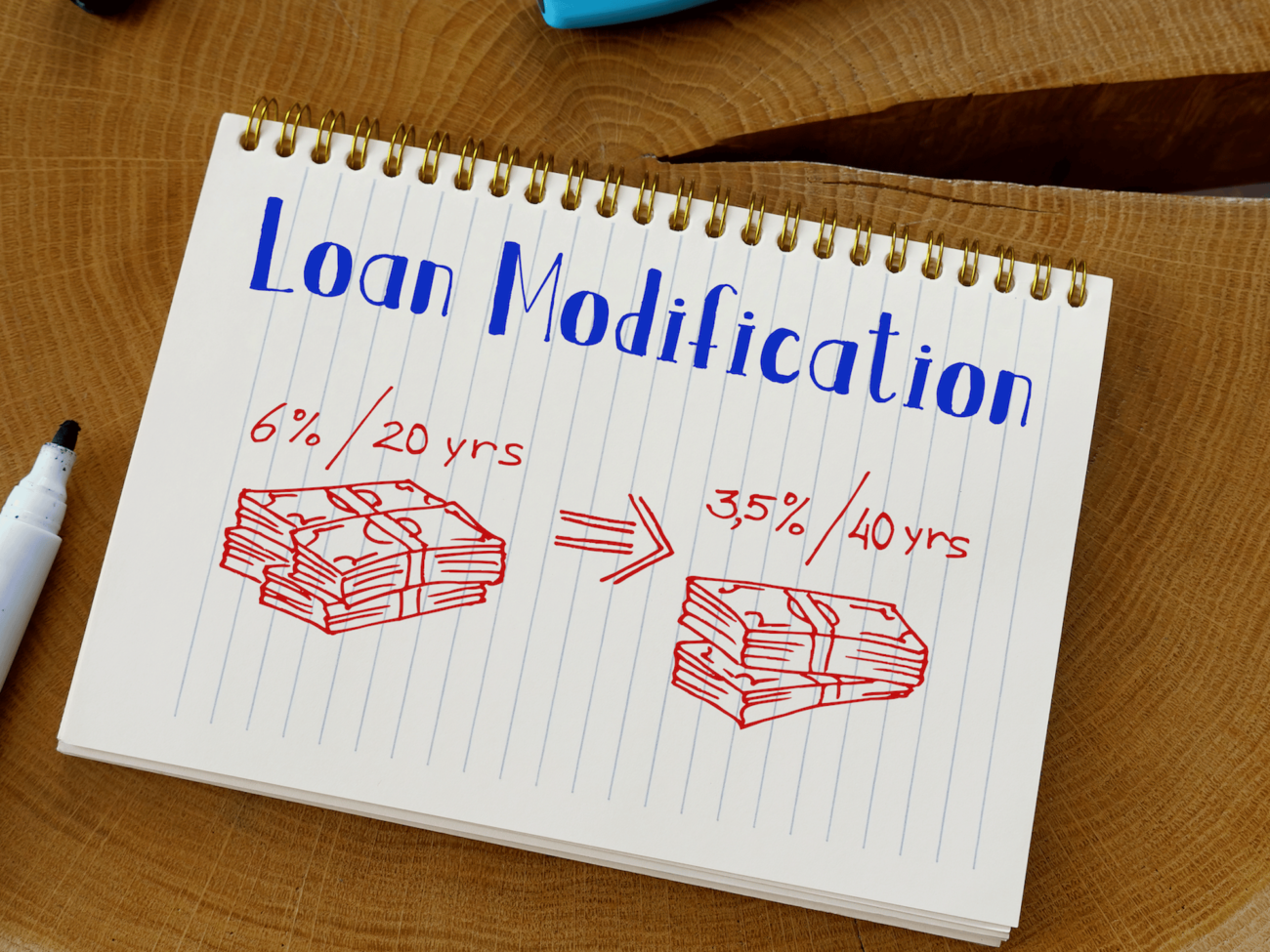
Applying for a loan and managing EMIs can sometimes get overwhelming. Many people hesitate to take loans due to the fear of not being able to repay the amount later. But, they are not aware of the fact that there are options available to manage the loan amount if the borrower is unable to repay the entire amount. Many borrowers also assume that the only options available are either default or loan settlement. But, there is another safer and legal option available called as the “loan modification”
Financial emergencies can occur at any time making the situation difficult for you. Salary delays, job changes, medical expenses etc can make your expenses and monthly EMI challenging to manage. In this blog, we will understand the loan modification process, rules and regulations behind it, eligibility and how lenders consider whether to actually reduce your EMI.
What Is Loan Modification?
Loan modification refers to the process of changing the terms of your current loan to enable easy payment without closing the loan account.
Instead of treating you as a defaulter, your repayment scheme is readjusted.
Common changes in loan modification
- EMI reduction
- Tenure extension
- Temporary EMI Pause (Moratorium)
- Adjustment of interest rate (Infrequent but possible)
- Conversion to Step-Up or Step-Down EMI
Important: The loan is still active and thus remains reflected in your credit history.
Why Lenders Prefer Loan Modification:
The banks and NBFCs would like to recover the money, not default on it.
It is better to have a slow paying borrower than one who does not pay at all.
So, lenders modify loans when they believe that:
- Your financial challenge is not permanent
- Your income is still present
- You are willing to pay
In case the risk is acceptable, they restructure instead of reporting default.
Understand The Rules and Regulations (India)
In India, modification is governed by RBI’s relief and restructuring frameworks. These allow lenders to change repayment terms without immediately classifying the account as a Non-Performing Asset, subject to assessment.
What RBI broadly expects from lenders
- Proper reassessment of income
- Borrower consent
- Hardship documentation
- Revised payment plan
- Continued reporting to credit bureaus
This is why loan modification is not automatic approval; it is risk-based decision-making.
How Lenders Decide Eligibility:
Lenders also re-evaluate your capacity to pay before modifying any loan.
Factors they check
- Current income compared with previous income
- Bank account credits
- Employer stability
- Existing EMIs
- Credit history behaviour
- Reason for financial stress
If you have no income, a modification is highly unlikely. If income is reduced but still present → high approval chance.
Difference Between Loan Modification VS Loan Settlement:
Many borrowers get confused between loan modification and loan settlement. While a loan settlement is a process of negotiation with the lender who agrees to accept a reduced, lump sum amount to close an existing loan. Whereas, loan modification process allows the borrower to permanently change the terms like reducing interest rates, extending payment tenure or reduce the principal amount.
Here are some key differences explained between both the options:
| Feature | Loan Modification | Loan Settlement |
| Loan status | The loan status continues after the lender’s consideration in changing the existing loan terms. | The loan status is closed early before the original term end date. |
| Credit impact | As the loan is not closed completely, the impact on credit score is less. | Once the loan is closed, it appears as “loan settled” on your profile, and this will severely drop your credit score. |
| Amount payable | Here, the payable amount remains the same, extending the term or lowering interest rates to help the borrower manage wisely. | Here, the entire payable amount is reduced and a lump sum amount is to be paid to the lender at once. |
| Future loan eligibility | As the status remains the same, there will be no difficulties in future loan eligibility criteria. | Due to loan settled remarks on the profile, it will be difficult to get approval for loans in the future. |
| Reported as | The remark is reported as restructured. | The remark is reported as “settled/write off” |
| Legal recovery risk | Lower risk and proactive approach to avoid foreclosure or legal action | Generally carries a higher and immediate risk of legal action if the agreement is not properly executed. |
| Best for | If you are facing a temporary hardship in your financial journey, this can be the best option | If you are facing a huge money loss and inability to pay the entire amount, this can be a better option. |
Hence, it is always better to consider and understand your financial situation then decide which one can be a better option. Try to manage with loan modification instead of loan settlement.
Loan Modification Process (Step-by-Step):
Step 1: Catch financial stress early.
Do not wait for multiple missed EMIs. Apply when difficulty begins.
Step 2: Contact Lender
Email or go to the branch and request a restructuring.
Step 3: Submit Hardship Proof
Examples:
- Salary reduction letter
- Medical bills
- What is Job Loss Proof?
- Statement of Loss for the Business
Step 4: Reconsideration of Income
Lender checks for affordability.
Step 5: Revised EMI Plan Issued
You get a new payment plan.
Step 6: Sign Modification Agreement
Loan continues with changed conditions.
Example: How EMI Changes After Modification
| Loan Amount | Rate | Original Tenure | Original EMI | New Tenure | New EMI |
| ₹3,00,000 | 16% | 3 years | ₹10,550 | 5 years | ₹7,300 |
| ₹5,00,000 | 18% | 4 years | ₹14,700 | 6 years | ₹10,150 |
In this case, you pay longer but avoid default and impact on your credit profile.
Things Lenders Don’t Tell You:
1. Timing is more important than credit score
If you apply before missing many EMIs → chances of approval go much higher.
2. Communication improves approval
Borrowers who try to contact lenders are viewed as less risky.
3. Small payment helps
Even partial payment indicates an intention to pay.
4. Not all restructuring hurts credit
A correctly filed restructure is much safer than a default or a settlement.
How to Request Correctly:
While applying for a loan modification request, ensure that you keep your request statement brief, factual, and professional. And before requesting, re-calculate your expected tenure, EMI and loan amount by an EMI calculator to understand the figures properly. Start by mentioning why you are in current financial hardship, but ensure it is not a fictional reason. Instead, it should be a true reason for which you are having problems. After explaining this, it is important to state how much you currently make to ensure that the bank has it and can reassess your ability to repay the loan properly. Ensure to state how long it will take for you to recover from this hardship and that you will continue repaying the loan in a responsible manner. Finally, state how much you can afford to pay monthly, also known as EMI.
Final Thoughts
Loan modification provides a legal and practical remedy for borrowers in a condition of temporary financial distress. Loan modification, as provided by the RBI-directed loan modification rules and regulation, permits banks and financial institutions to restructure the terms of your loan without closing it or harming your credit profile substantially.
Understanding this loan modification process will allow you to act early. This is the single biggest factor that lenders will look at: how early you request a loan modification.
Remember,
- Default hurts credit.
- Settlement blocks credit.
- Modification is protective of credit.
If difficulty with repayment begins, communicate right away. A structured solution today avoids financial problems tomorrow.”